Understanding EMG/NCS Reports: How Physicians Interpret the Findings

Understanding EMG/NCS Reports: How Physicians Interpret the Findings

,

Introduction
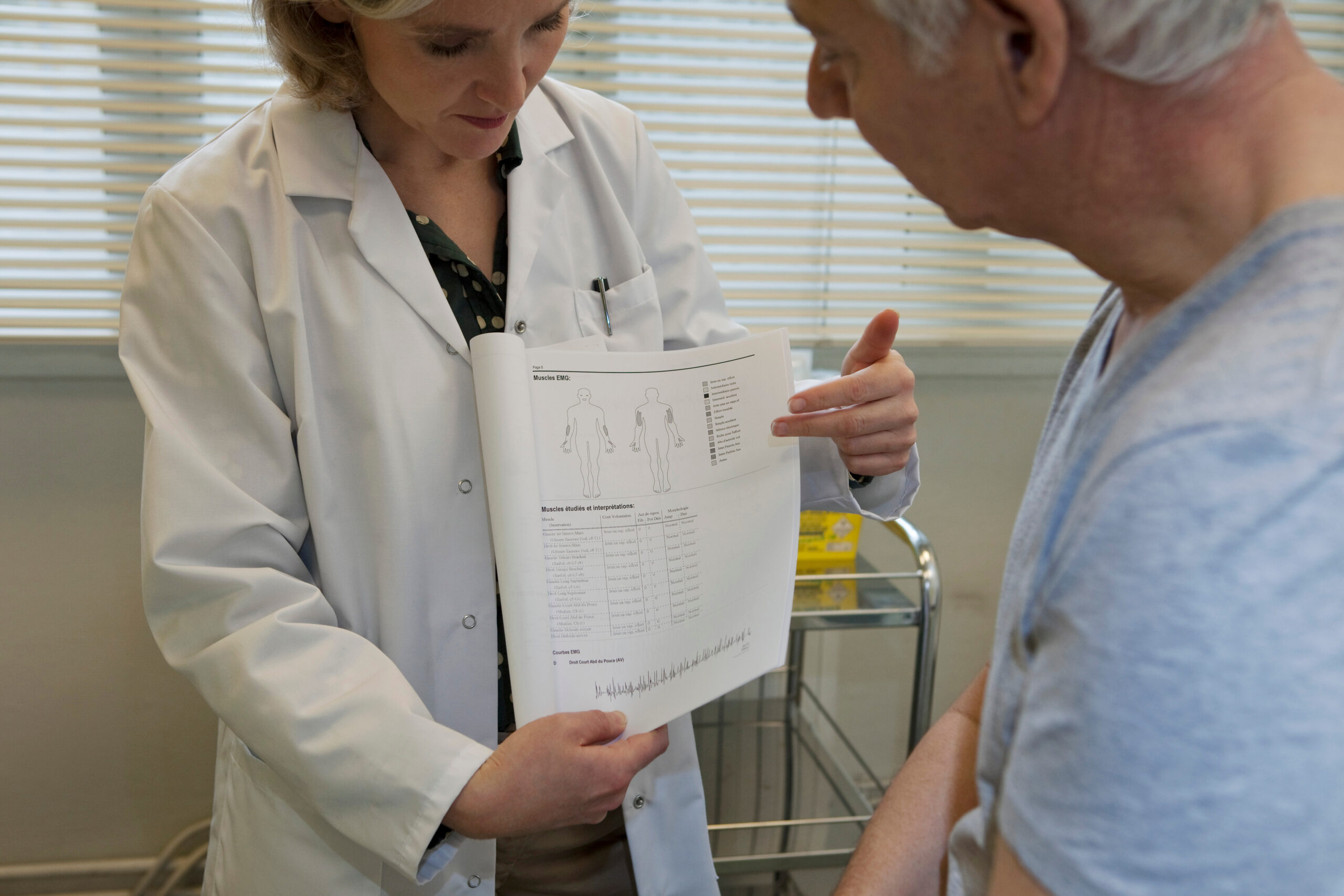
EMG/NCS testing provides valuable data, but the true impact lies in how results are interpreted. For referring providers, understanding the basics of report structure helps bridge test findings with clinical decision-making.

Components of an EMG/NCS Report

  1. Nerve Conduction Studies (NCS):
    • Latency: Time it takes for a nerve signal to travel.
    • Amplitude: Strength of the signal.
    • Conduction Velocity: Speed of the nerve impulse.
  2. Electromyography (EMG):
    • Insertional Activity: Electrical activity as the needle enters the muscle.
    • Spontaneous Activity: Presence of fibrillations, positive sharp waves (indicating denervation).
    • Motor Unit Potentials: Shape and recruitment patterns during muscle contraction.

Clinical Interpretation

  • Normal findings: Rule out neuropathy or myopathy.
  • Abnormal slowing: Suggests demyelination.
  • Low amplitude: Indicates axonal loss.
  • EMG denervation changes: Confirm radiculopathy or motor neuropathy.

Practical Example

  • Case: A patient with hand numbness and tingling.
  • Findings: NCS shows prolonged median nerve latency at the wrist, EMG is normal in cervical roots.
  • Interpretation: Carpal tunnel syndrome—not cervical radiculopathy.

Why Report Clarity Matters
Referring physicians rely on concise, clinically relevant conclusions. A well-structured report should answer the referral question directly, not overwhelm with raw data.


By understanding key report elements, providers can better integrate EMG/NCS results into patient care. Clear communication between the electromyographer and referring provider ensures optimal outcomes.

Integrity Diagnostics delivers concise, actionable reports tailored to your referral needs. Contact us to learn more about our testing approach.
Leave a Reply

Your email address will not be published. Required fields are marked *

Blogs

You May Also Like

We see that you are looking for help with NCS Testing, EMG Testing. Here are more blogs that you may find useful. Also, don’t forget to subscribe!

May 10, 2026
The Role of EMG/NCS in Workers’ Compensation and Occupational Medicine

Introduction In workers’ compensation and occupational medicine cases, objective data is essential. Symptoms like numbness, tingling, or weakness can be subjective, but EMG/NCS provides measurable evidence that supports accurate diagnosis, causation, and treatment planning. Key Applications in Work-Related Cases Case ExampleA warehouse worker reported hand weakness after years of repetitive lifting. MRI showed cervical spine […]

NCS Testing EMG Testing Diagnostic Testing Worker's Comp Cases
April 10, 2026
EMG vs. NCS: What’s the Difference and When Are Both Needed?

Introduction If your doctor has ordered an EMG (electromyography) and NCS (nerve conduction study), you may be wondering: Aren’t they the same thing? While they’re often done together, they measure different things—and using both provides the clearest picture of how your nerves and muscles are working. Nerve Conduction Study (NCS): Testing the Wiring Electromyography (EMG): […]

Diagnostic Testing NCS Testing EMG Testing
March 10, 2026
The Role of Electrodiagnostic Testing in Physical Therapy and Rehab

IntroductionPhysical therapy and rehabilitation rely heavily on accurate diagnosis. For patients with neuromuscular symptoms, EMG/NCS provides valuable insights that shape therapy plans, monitor progress, and guide return-to-function goals. Guiding Therapy Planning Monitoring Recovery Supporting Return-to-Function Why It MattersWithout EMG/NCS, therapy plans may be based solely on symptoms, which can be misleading. Electrodiagnostic testing adds objective […]

NCS Testing EMG Testing Diagnostic Testing