
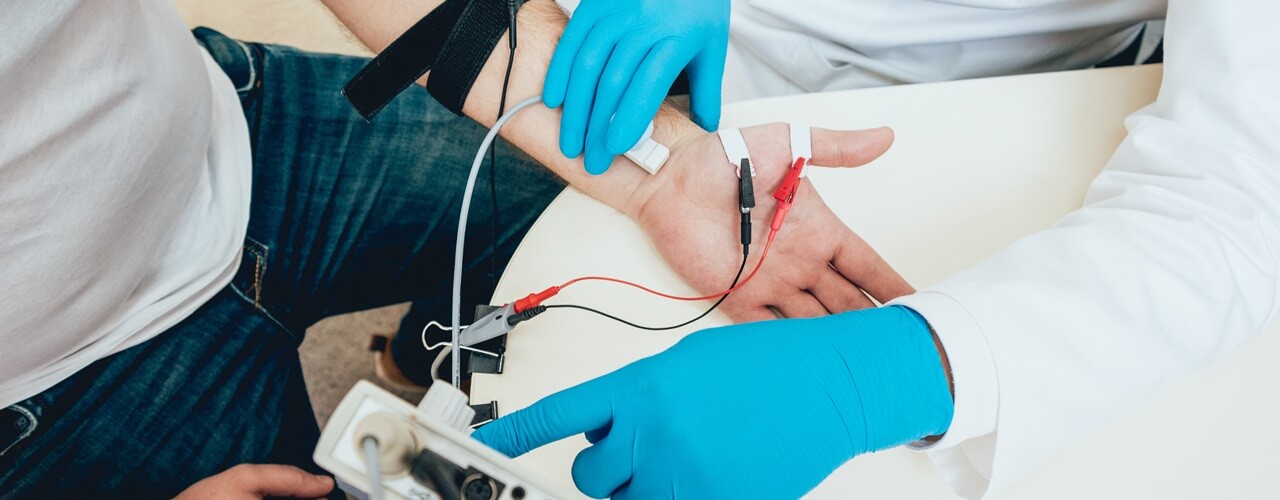
If you have a client who suspects they suffered nerve damage on the job, they’ll likely need to undergo EMG testing for neuropathy. This process can help confirm or rule out potential causes of numbness and tingling in the extremities, ensuring that you can make a successful case.
We know your clients may have questions about the EMG testing process that you might need help answering. At Integrity Diagnostics, we pride ourselves on making the diagnostic portion of a worker’s compensation case run as smoothly as possible, and that includes giving you the tools and information you need to keep your clients informed.
Today, we want to explore what neuropathy is, why EMG testing for neuropathy is important, and what your client can expect from the testing process. Do you have any specific questions? Call our Georgia, Florida, South Carolina, Maryland, Pennsylvania, Tennessee, and Kentucky locations to speak to our friendly staff!
What is Neuropathy?
Neuropathy–or, more specifically, peripheral neuropathy–is an umbrella term for a range of conditions resulting from damage to the peripheral nerves. Your peripheral nerves are all the nerves in your body except your brain and spinal cord (which make up the central nervous system).
Your peripheral nerves are responsible for carrying signals from the brain out to the rest of your body. These signals control your movements, recognition of sensory input (i.e., feeling of heat or cold), and even automatic functions like your breath or heartbeat.
When something damages these nerves, those signals can’t get through, causing various symptoms depending on which nerves are affected. Examples include muscle weakness, numbness, tingling, or heat intolerance–but that is by no means an exhaustive list.
Neuropathy and EMG Testing in Worker’s Compensation Cases
While there are many reasons someone might develop peripheral neuropathy, physical injury is the cause most relevant to worker’s compensation cases. It’s important to recognize that someone doesn’t need to suffer a severe injury to develop nerve damage. In fact, one way people can damage their nerves is through repetitive motions. The repeated strain ultimately leads to nerve damage and neuropathy or neuropathy-like symptoms.
That said, neuropathy can also develop as a result of common workplace accidents, such as slips and falls or lifting too heavy a load without proper equipment.
EMG testing for neuropathy is essential because it helps confirm the extent of the nerve damage (or if it is even present). The detailed reports the Integrity Diagnostics team creates for every one of our patients will give you all the information necessary to build your client’s case.
What Happens During EMG Testing for Neuropathy?
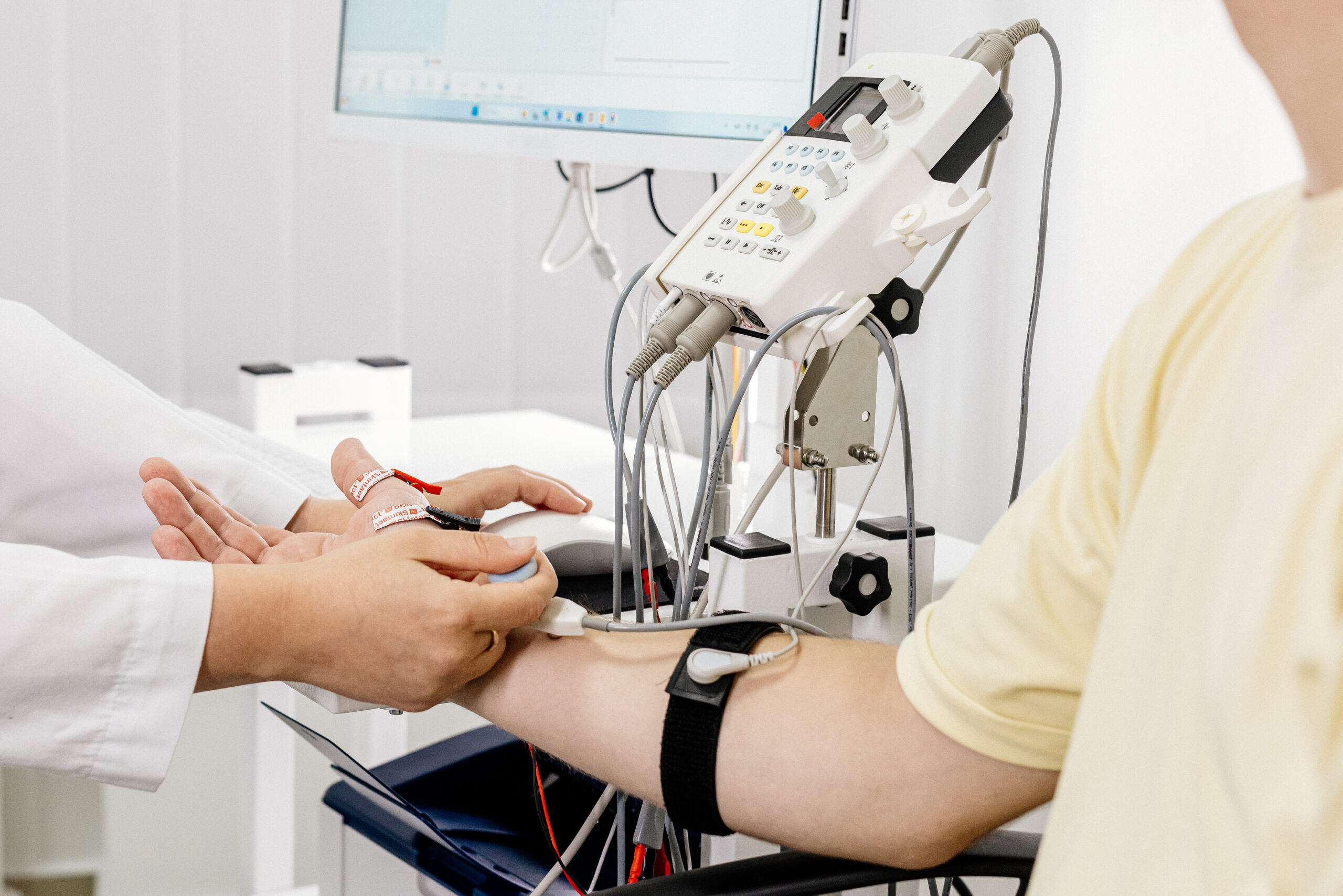
EMG testing is a simple procedure. We almost always pair it with an NCS test to provide a full range of data for your worker’s compensation claim.
During an EMG test, we insert needle electrodes into the patient’s affected muscle and then ask them to activate and relax it. The test measures the muscle’s electrical activity to assess its health and function.
An NCS test uses surface electrodes to measure the speed at which signals travel down a nerve, providing information about the nerve’s health and function.
The entire process typically takes around an hour (although it may take shorter or longer depending on what all requires testing). Our diagnostic experts will prepare a full report, including our interpretation of the results and treatment recommendations, and have it to you and your patient’s doctor within 24-48 hours.
Call Us Today for More Information
Integrity Diagnostics is a trusted source for expert diagnostic testing in the Georgia, Florida, South Carolina, Maryland, Pennsylvania, Tennessee, and Kentucky areas. Our quick turnaround and team of musculoskeletal experts will provide all the tools you need to craft an excellent worker’s compensation case.
If you’d like to learn more about the process–or refer a client for testing–call us today to get started.




Leave a Reply